Computer Archaeology in the Wolfram Language
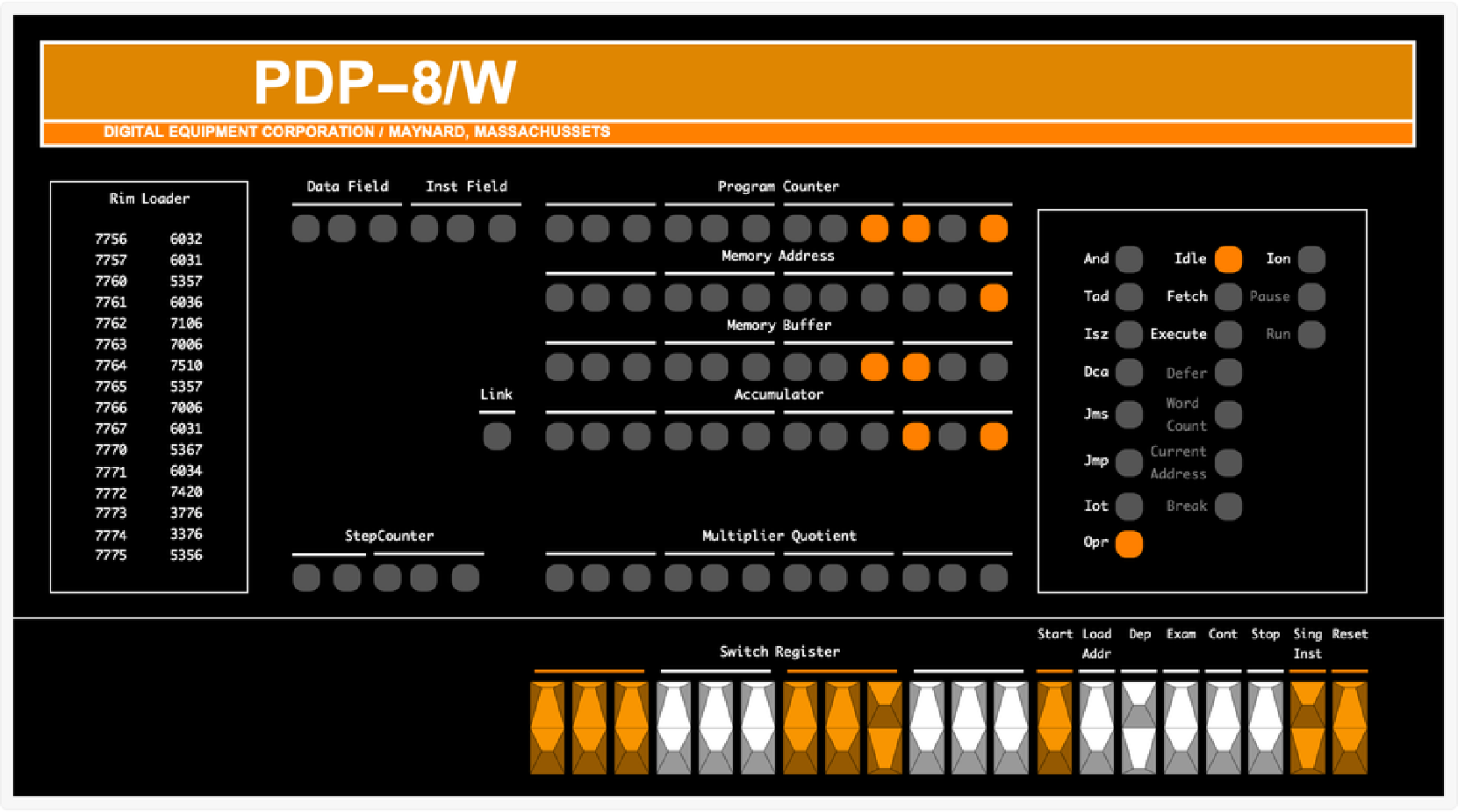
At the Wolfram Technology Conference, I gave a talk on preserving vintage computational systems by reimplementing them as virtual machines in the Wolfram Language — what you might call computer archaeology. This work was done with the extensive help of Brian Silverman, an expert in writing emulators for old computers, whose guidance was invaluable throughout.
The talk covers two machines in particular: the DEC PDP-1 (late 1950s), including an emulation of the original Spacewar!, and the MOS Technology 6502 (1975), the 8-bit processor that powered the NES and the Apple II. Both were implemented using an experimental VirtualMachine framework built in WL.
Wolfram Language is not the obvious choice for this kind of work — performance is a real limitation compared to something like Zig or C. But that’s not really the point. Where WL shines is in interactive exploration and visualization: being able to inspect memory, step through instructions, and build rich demos without leaving the notebook environment. It’s a great fit for the archaeology side of the project — understanding how these machines worked, how their designs evolved, and which of their ideas are still with us today.